- You might see people making videos, like me, or so-called experts, and think they've never struggled. And it's not true. - I couldn't learn quick enough - It's about responsibility, not blame
Read More
- You might see people making videos, like me, or so-called experts, and think they've never struggled. And it's not true. - I couldn't learn quick enough - It's about responsibility, not blame
Read More- Discuss it openly with your manager
- Outline your intention
- Understand their perspective - deeply. Avoid being defensive.
- Share your perspective - calmly. Admit wrongdoing if necessary.
- Express your commitment to progress and a resolution.
- Understand what will make it better and ask for support.
- Thank them for their time and understanding.
- Deliver on your commitment and ask for feedback.
Read More- Identify top needs and values - Outline your skills - Create a professional profile - Discover suitable opportunities - Review CV and cover letter - Complete interview preparation
Read MoreHow do I change careers?
Should I go back to college?
How do I quit my job?
How do I make more money?
How do I build confidence?
Should I quit my job?
How do I find my passion?
Do I need to take a salary cut?
What should I do if I'm not getting responses from my applications?
What should I tell an employer about a gap on my CV?
Read MoreWhat to do if your boss is a Difficult to Interpret Communicator: Ask them to clarify what your goals are. You can suggest the form of from X to Y by WHEN. This will make sure that you're on the same page. Ask them what they think success would look like, and be specific. Say what it is and what it isn't. If they've asked you for something complicated or unreasonable, simply ask them "how would you suggest I do that?"
Read MoreWe can all shy away from solving complex problems because they require effort and time. What's more, is they can often lead to feelings of failure and rejection if our solutions don't go well. Having said that, it's worth considering the upsides of complex problem solving and how it can progress our careers
Burnout and overwork can come from demanding bosses or tight deadlines. But sometimes there are other factors that lead to burnout, and these are factors that we can influence. In this video, I'll outline some tips and suggestions you can implement to avoid burnout at work.
Read MoreIn uncertain times we need to focus on gaining certainty and stability. But for many people, it's easier said that done. We have to focus on not only what we can control and what we can influence, but we also have to be adaptable. Remember, it's not the strongest that survive, it's the most adaptable to change.
Read MoreThis standard question is one that throws off many candidates, but it doesn't need to be that way. Be honest about your strength and make it relevant to the role. And be honest about your weakness while making sure it's NOT essential to the role. Oh and one more thing... tell them a real weakness -not just a strength in disguise - the interviewers will be smart enough to see-through that strategy, and it's unlikely to endear them to you.
Read MoreWell, what's the answer? "Why do you want this job?" Is it simply just for the cash? Or do you like the mission, vision, products or services of the organisation? I'll give you a hint - the latter is a good place to start.
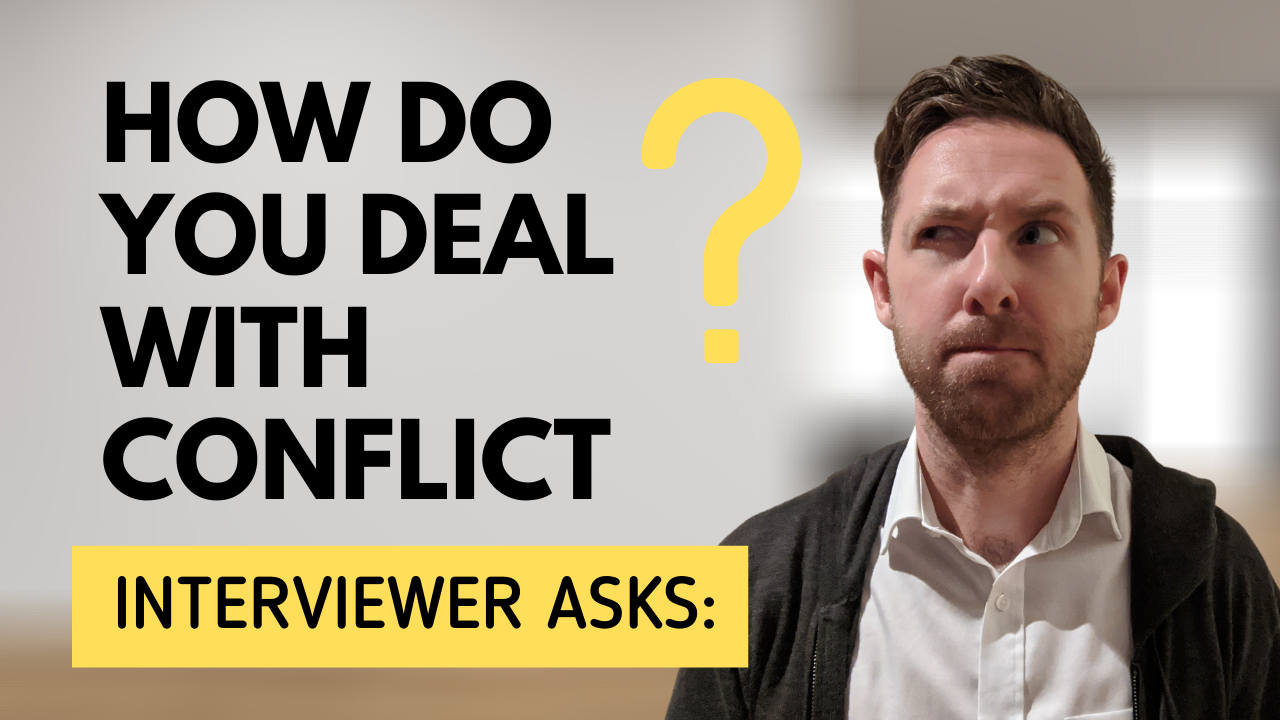
Read MoreThe dreaded question! 'How do you deal with conflict?' To get this answer right, you have to show good people skills and the ability to come to a workable solution with your colleague. You'll also want to show flexibility in your approach, but also a little bit of struggle - if the conflict seems too easy to resolve, it's not going to seem like it was a big deal at all.
Read MoreEvery interviewer wants to feel that you're a good choice for their position, and that you left your last role in a positive way (e.g. that you didn't have lots of arguments, that it wasn't down to poor performance etc.). So it's important that you assure your interview that 1. you left on good terms 2. it was your choice
Read MoreWhat's the first question almost every interviewer will ask? "Can you tell Us about yourself please? It sounds simple but so many interviewees find it tricky. It should be between 2-3 minutes long approximately and remember to keep it concise and relevant!
Read MoreThere are two basic factors in understanding the result of decisions: luck and skill. We like to think that when we make good decisions, it's because of skill, and bad decisions are because of bad luck! But really, you can make a good decision, but get unlucky and have a bad result, and equally, you could make a bad decision and get lucky with a good result. It's important to distinguish between these two factors because otherwise, it could negatively affect your confidence in decision making.
Read MoreIncrease in brand awareness (e.g. social listening, website visits, in-person visits, market share). In a previous video, I spoke about how to emphasise your impact on increasing online sentiment through reviews, subscribers and likes. And in this video I’ll discuss underlining your impact on brand awareness if you’re in a business that sells products.
This is all about highlighting the marketing or promotional opportunities that you develop for the business or the relationships that you are able to leverage.
Read MoreIf your main job is sales, then you’d be expected to generate income for the business. But what about all those people who are involved in other areas, yet still manage to bring in new business. That’s very valuable and worth taking into account when speaking to a manager about a salary increase or a promotion.
Read MoreHow do you emphasize your contribution to increasing positive customer sentiment (e.g. online reviews)? And why is it important to do so?
If I asked whether you’d be more inclined to work with or buy something from a company or a brand that you liked, you’d probably say ‘of course I would’. According to Dr. Robert Cialdini, who is a professor of psychology and marketing, and author of a book called ‘Influence’, “liking” is one of the 6 key factors of persuasion.
With that in mind, if we can increase “liking” or the online reputation of a brand, that has a value because it’s going to influence customers/clients to engage in our services and it might lead to an increase in sales. So how do you calculate it?
How do you convey the value of your work and how your efforts are having a positive impact on your company/organisation?
Here are a couple of useful ways to understand what you have achieved and what you have contributed. They should primarily be used for acknowledging your own efforts, but could also be used for having respectful and professional conversations with your manager.
They should not be used in a moment of conflict or as any form of threat. That would be counterproductive - at least in my opinion.
Read MoreShould you do an MBA? Well that depends on what you’re hoping to get out of it. In this video, I’ll discuss 5 of the main reasons people decide to undertake such a big commitment and some points on how to figure out if it’s the right next step for you.
The ultimate question is: will this help you achieve your end goal? (a new job, more knowledge etc.?)
Here is the Article I mention in the video:
4 Things That Set Successful CEOs Apart: https://hbr.org/2017/05/what-sets-successful-ceos-apart#:~:text=to%20high%20performance.-,The%20Findings,proactively%2C%20and%20they%20deliver%20reliably.
Read MoreAre you a subject matter expert that shares your expertise on an area outside of your role? Do you teach new skills to people on your team? Do you save your company money by providing in-house training? If so, do you ever consider how much that’s worth to your company? A simple way to express its value is to figure out how much it would cost to outsource it to another company.
Read More