


Can you improve? Can you become more intelligent? Both of the those questions will most likely be answered by your belief system. Therefore, you may have answered either ‘yes’, ‘no’ or ‘maybe’. However, they should be only answered with the facts - and the answer would be ‘yes’. The problem is that many of us have a belief about the way our intelligence is or the way it will always be.
Read More
There are challenges for all types of people when entering (or re-entering) the workforce. If you are an older job seeker, who has been out of work, it’s important to focus on what you can do, along with skills and experience that you have built up over the years. Also, remember that if you don’t have a qualification, you were still doing something when others were getting their qualifications. So, what were you doing? Gaining experience? Learning practical skills? Focus on the positives.
Read More
What happens when you come out of college or a training course and you can’t find a job? I imagine most young people have experienced this before. You hear things like “Sorry, we’re looking for someone with more experience” or “Sorry, you don’t have the qualifications that we’re looking for”. I’ve been in that position myself and it’s definitely not something that you want to hear after you’ve spent 4 years completing a course.
You’ve no experience so you can’t get a job and you’ve no job so you can’t get experience.
When you’re starting your career, you need to take the first basic steps towards getting a job. It may be a daunting task for some people, but it doesn’t need to be. There are many things you could do, but the most important thing is to prioritise what you need to do first. For example, at some stage you should build a LinkedIn profile, undertake some professional development courses, start networking etc, but they’re not at the top of the ‘to do’ list just yet. So, what are the top priorities?
Here are the top 6 things to do when starting out on your career:
You’re not getting any good results from your job search, right? You’ve emailed every company in your desired industry and you didn’t get the job. You’ve tried "everything" and nothing has worked! Without knowing anything about you, I know that if what you’re doing isn’t working, then it’s time to try something else. Simple, right?
Please keep in mind that some of these suggestions will be more suitable than others, depending on the type of work and the industry that you’re interested in, so it’s up to you to choose the ones that are best suited to you.
Here are 5 alternative ways to get your foot in the door of a company that you’d really like to work for.

Writing cover letters can be tricky considering that it’s more of an art than a science. Nevertheless, there are still a few pointers that we can follow to allow us to put the best foot forward and make a good first impression. Here they are:
- Use two or three sentences for each paragraph.
- Separate out the paragraphs and make them easy to read.
- Ensure that the letter is specific to the company and the position.
Interviews are challenging and often we have good reason to feel worried coming up to the big day. Some of the biggest difficulties people have involve explaining reasons why they haven’t been working or personal issues that are difficult to talk about - or both!
The first thing to remember is that:
The truth will set you free!

People often ask me how I help people to find and do work that they love. The answer is: I have a system that I work off. And here it is...
Read More
There are many pages online offering advice for writing the best Curriculum Vitae possible, but let’s start by getting the simple things right. Make sure that you have good quality content, a clear layout/design, relevant information, and the correct length. In terms of writing a CV, you can use your own personal style as long as you stick to a few standard rules. Generally speaking:
Read More
Networking is important for job-hunting and developing business connections - and everyone knows it. We prefer to work with people we know and to hire people we know.
BUT, there’s a problem! Almost everyone I speak to about networking tell me that they really dislike it. So here are a couple of tips and pointers to remember about networking that I hope will help you.
Read More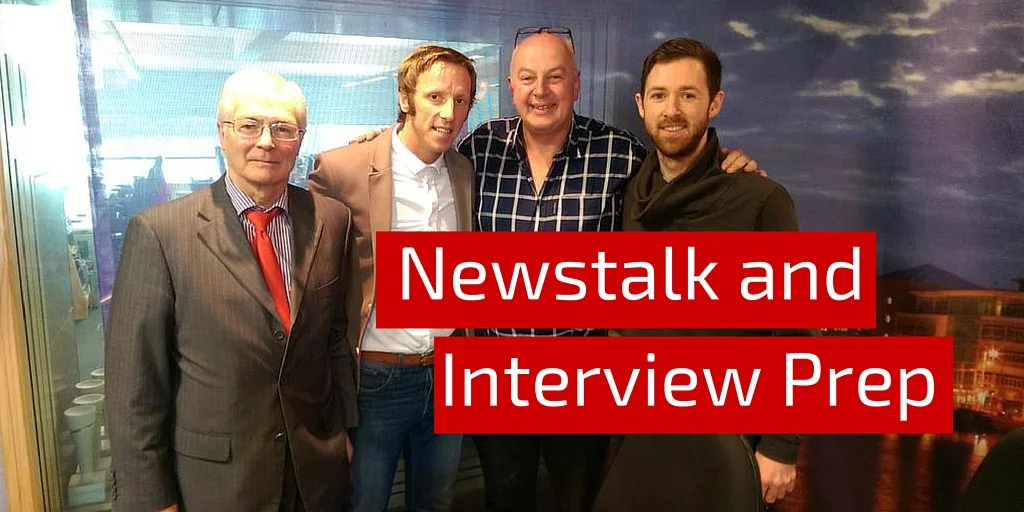
I’ve been on radio 4 times now, which is a lot for me as I had never done anything like that before. Initially I thought it was going to be a nerve-wrecking experience, but it was absolutely fine. And I believe the reason for that comes down to my preparation. There are a couple I things that I try to do before radio interviews that are relevant for any type of interview or important meeting. Here they are:
Read More
Below is a short tale by Mullah Nasruddin about searching. It’s a tale with a strong lesson, which like a lot of things, is simple when you know it. Take a look:
A man happened upon his friend one night on his hands and knees beneath the only streetlight in the immediate area.
‘What are you doing?’ he asked his friend.
The man glanced up then back down at the earth he was sifting between his fingers. ‘I lost my keys’, he said. “I’ve been searching for more than an hour and I still haven’t found them.'
Read More
When so many people want to change jobs or even change industries, some of the difficulties that they come up with involve feeling that they are stuck in the same job because it’s all they’ve ever done. And while this may be true, it’s not true that they don’t have any skills that could be used in other positions. In any case, whenever you go to a new workplace or company, you have to learn the ropes in the new position. Therefore, often the details of the job or the industry may be different, but the fundamental skills are the same.
Read More
Human beings have an innate desire to help each other out or contribute to the greater good of society, so it's normal for people to say that they want to "work with people". Fantastic!... but let's go into a little bit more detail so that we can define the goal.
Read More
View the full list of career types and expand your options.
*Click the industry of interest to go directly to that area.
Read More
Some people don’t like their jobs and want to change careers. Others don’t like their jobs because there’s too much stress at work. If you’re in the second category, then making sure that you have active recovery periods every week is key. It can be a waste of time and energy changing jobs to avoid something like stress - because you could just walk into the next job and have even more stress there. In that case, you haven’t really solved the problem, you’ve just changed the location of where it happens.
Read More